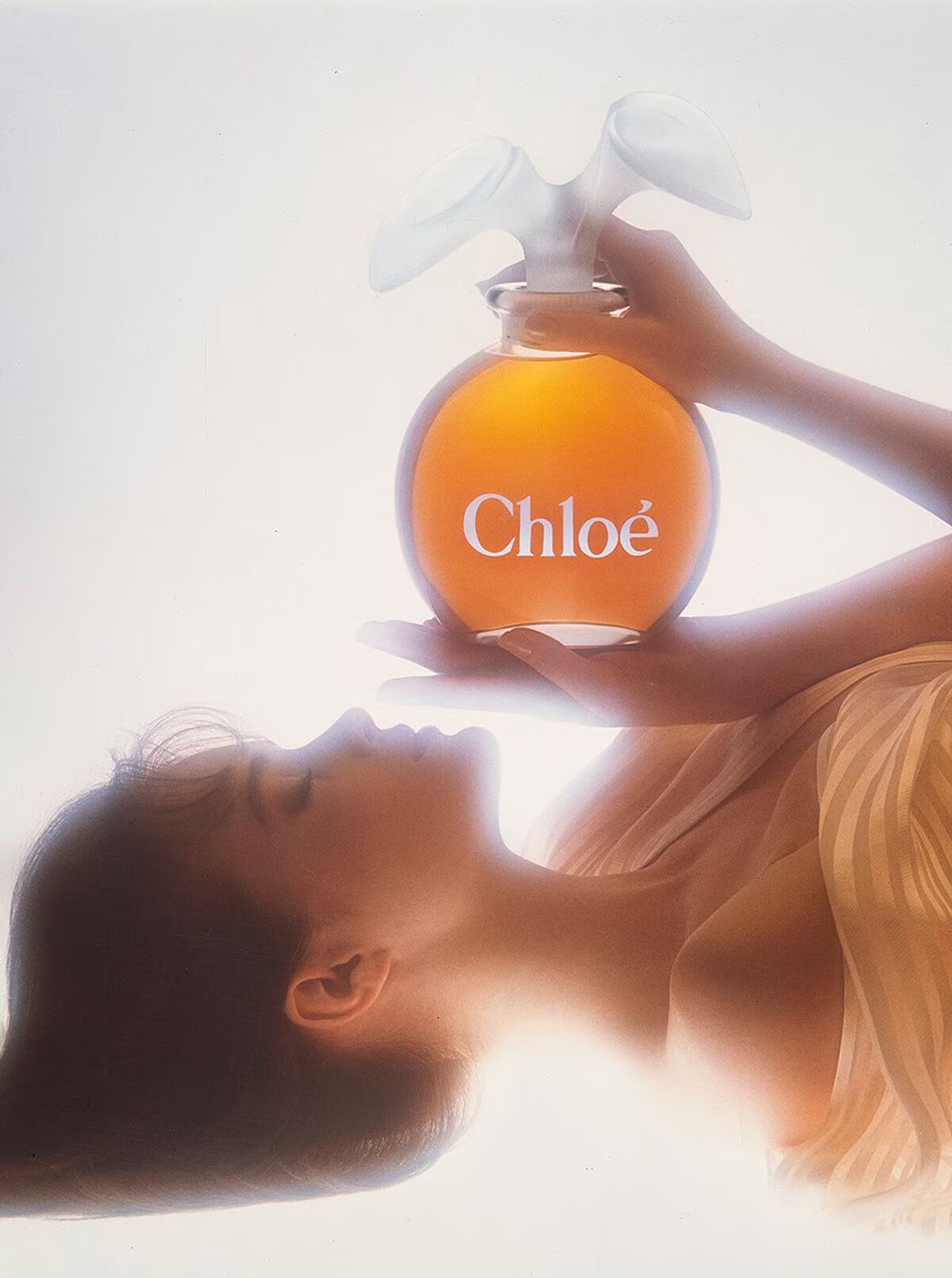
Chloé is the girl who spends every summer in Saint-Tropez.
She’s the girl who carries her emotional baggage in a wicker beach bag—too chic to be a hippie, too hippie to be just chic. Chloé was forged in lace, in silk, in the silhouettes of women who need clothes to live, not to live for clothes. Chloé is sometimes a Lolita, sometimes a diva of the medinas. The quintessential boho-chic silhouette. Chloé is also a girl from the Left Bank, conceived in the spirit of the revolutionary fervor of the era in which she was created. More than just a fashion house, Chloé is a defiant rebuke to the social and fashion conventions of the time.

Gabrielle “Gaby” Aghion (named after her husband and childhood friend Raymond Aghion), the founder of the fashion house, was a woman born into culture—literally: with an Italian mother and a Greek father, she came from the left-leaning intellectual bourgeoisie and was born in Alexandria. Chloé is a fashion house marked by deeply Mediterranean cultural and aesthetic influences. Gaby Aghion’s mother, an elegant, bourgeois woman, had her dresses made by seamstresses in Alexandria, based on the latest Parisian fashions. From childhood onward, the future creative director observed femininity as a distinct quality, an inherent extension of the women around her. More than a matter of gender, femininity is a way of life, of thought, and of movement. At the time, the DNA of the major fashion houses was to remain discreet and to address aesthetic concerns rather than the realities of daily life. As she grew older, Gaby made a choice. She, who knew so much about fashion through her social circle and had such a thirst for life, grew weary of her existence as a bourgeois consumer and, at age 31, decided to offer her services as a supplier to the major brands she was associated with (Dior, Schiaparelli, Carven…). In 1952, Chloé was born.

Strictly speaking, this was unheard of: a woman from the bourgeoisie—who wasn’t supposed to work, let alone contribute anything to fashion houses—became an entrepreneur. Nevertheless, Gaby’s life up to that point had been marked by philosophical discussions among left-wing circles and intellectual and artistic social gatherings; upon her arrival in Paris in 1945, she enrolled at Sciences Po with her husband. She was always far from being an idle bourgeois woman.
Chloé’s first fashion show took place at the Café de Flore, a gathering place for Parisian artists and intellectuals, in 1958. It was a spring-summer collection—the first luxury ready-to-wear collection. Since its founding, Chloé has seen various designers come and go at the helm. Until …, Gaby Aghion served as “artistic director,” but having never sewn herself—and considering herself untalented—she preferred to use her extraordinary flair to scout out future talent. Among them was the iconic Karl Lagerfeld, who quickly became her sole designer given the sheer scope of his talent, until 1997 (when he left for Chanel and was replaced by the young Stella McCartney).
But then, in practical terms, what exactly is the Chloé aesthetic?

Chloé’s first iconic look was the result of a collaboration between Gaby Aghion and Maxime de La Falaise in 1960. It was the Embrun dress: a T-shirt-style dress cinched at the waist. A “two-in-one” design, so to speak. The silhouette is elegant, feminine, but above all “casual,” as Gaby herself put it. This marked the beginning of an aesthetic defined by the blend of functionality and elegance in clothing. At that time, Chloé also embraced fluidity with its silk blouses.
The 1960s were marked by Lagerfeld’s arrival at the House, which officially entered its bohemian-chic era with the designer’s creations. His aesthetic choices foreshadowed the rise of the 1970s and the popularity of prints. Art Nouveau was also a source of inspiration for the designer. The Tertulia dress is a prime example: its motifs express an aesthetic focus on print rather than form. Its stripes elongate the silhouette, making the woman appear as tall as an Alexandrian statue. The sleeves and hem of the dress feature a circular print. The garment itself is fairly straight and form-fitting. It is a dress that allows for freedom of movement while maintaining a strong sense of femininity and a pursuit of aesthetic beauty through pictorial art.

Materials such as silk are among those frequently used by the House. As early as 1962, there was the blouse; in 1969, flowing, casual, and elegant silk pants. This silhouette also appeared at the Spring/Summer 2024 show during Paris Fashion Week, in a blazer, pants, and top ensemble, under the artistic direction of Chemena Kamali. Stella McCartney’s collections for the brand, from 1997 to 2001, also paid tribute to satin on more than one occasion.
In the 1970s, Chloé sought to embody a romantic, bohemian, nomadic spirit. She was a woman of the world—a woman who traveled and read. An elegant woman who was self-sufficient. A new element made its debut in this decade: the cape. For the first time, the House sought to strike a balance between masculine and feminine. Gender was dissected, reimagined, and reappropriated. Once again, the use of the cape—which later evolved into trench coats and other long coats—left its mark on the brand. During the latest Fashion Week, at its Spring/Summer 2026 show, Chloé unveiled a collection of long coats and capes, cinched not at the waist but at the thighs. This is proof that the brand’s reinterpretation of the body continues to perpetuate that ethereal touch of masculinity.
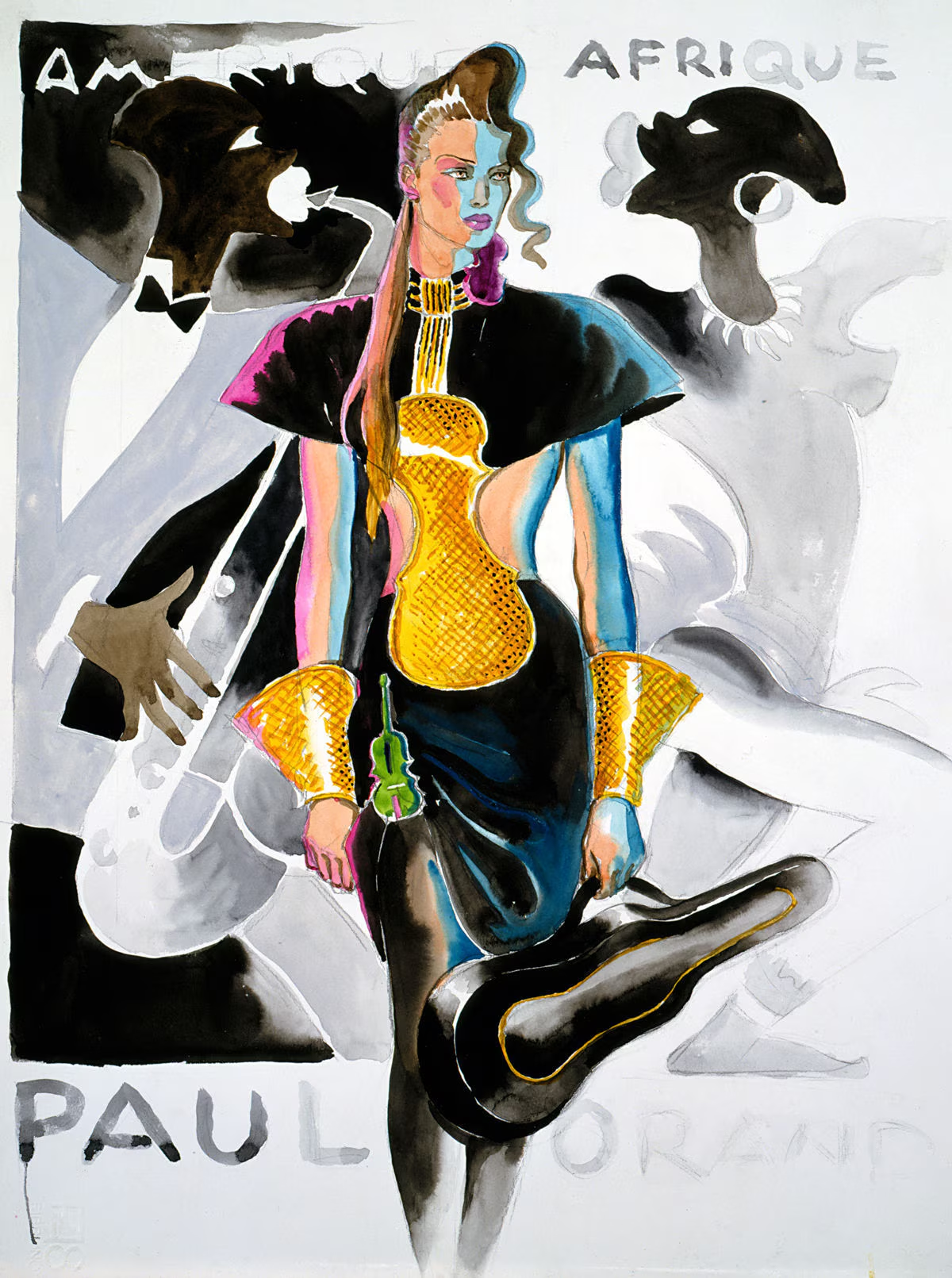
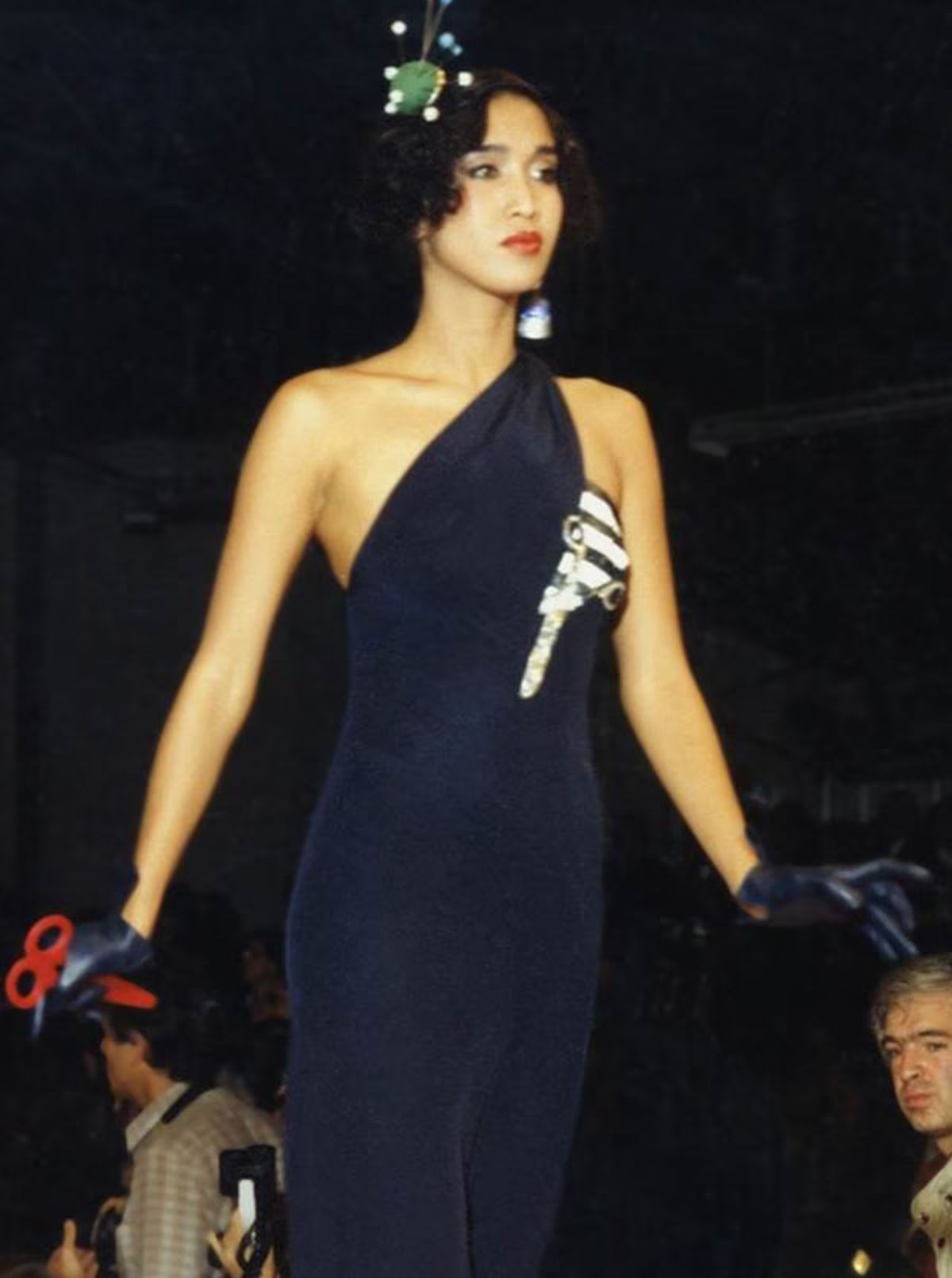
The 1980s were a time of artistic experimentation in fashion—not just at Chloé, but at all the fashion houses. Lagerfeld, in particular, designed the iconic “Scissors” dress and the “Angkor” dress—the former inspired by haute couture, the latter by music. It was a more colorful era for Chloé, which had previously focused its color palettes on beige and pastels. Gaby Aghion described her brand’s colors as the colors of Egypt. Starting in this new decade, Chloé would adopt a style increasingly inspired by pop culture.
In the 1990s, the fashion house underwent a leadership transition that raised a few eyebrows at the time: the great Karl Lagerfeld stepped down, handing the reins to the young Stella McCartney, then 25 years old and fresh out of Central Saint Martins. Lagerfeld had announced: “Chloé has chosen a famous name to succeed me—McCartney—who is known only in the world of music. They should have chosen someone who is known in the fashion world. Let’s hope she has as much talent as her father.” But the negative media reaction quickly subsided as the young woman proved her success at the fashion house. Chloé took on a more rock ’n’ roll vibe. McCartney introduced a sexier, bolder aesthetic—still a far cry from the “porno chic” of the 2000s, but already far less demure than the brand had been up to that point. On the brand’s official website, it reads: “Stella McCartney marks the return of youth, carefree spirit, and glamour to the brand. Her collections reflect a blend of eclectic influences, from Britpop to Savile Row to Girl Power. Chloé welcomes a new generation of die-hard fans.”

Two new Chloé icons emerged in the 2000s: the Paddington, a stunning leather bag—roomy, soft, filled with odds and ends, and adorned with a large padlock. Whatever a girl has to put in her bag, she’ll put it in there. It’s a carry-on—the emotional baggage of all the It Girls of 2005. The following year, in 2006, wedge platform shoes reignited the fervor of the 1970s.


Over the years, Chloé has seen its image evolve and change, yet it has never lost sight of itself. Every creative director has known exactly where to draw the line. The spirit of Gaby Aghion, who passed away in 2014, has never left the brand’s runways. Chloé is a cool, laid-back, chic, and elegant woman. She has evolved with the times: a cultured, independent woman of high society; an artist; a pop-culture icon; a sexy, rock-and-roll woman; a fluid and gentle woman. Chloé has as many alter egos as there are designers and decades, but she has worn only one hat all these years: the woman who experiments.


