You are currently viewing "The Era of Porno Chic: A Unique Fashion Event"
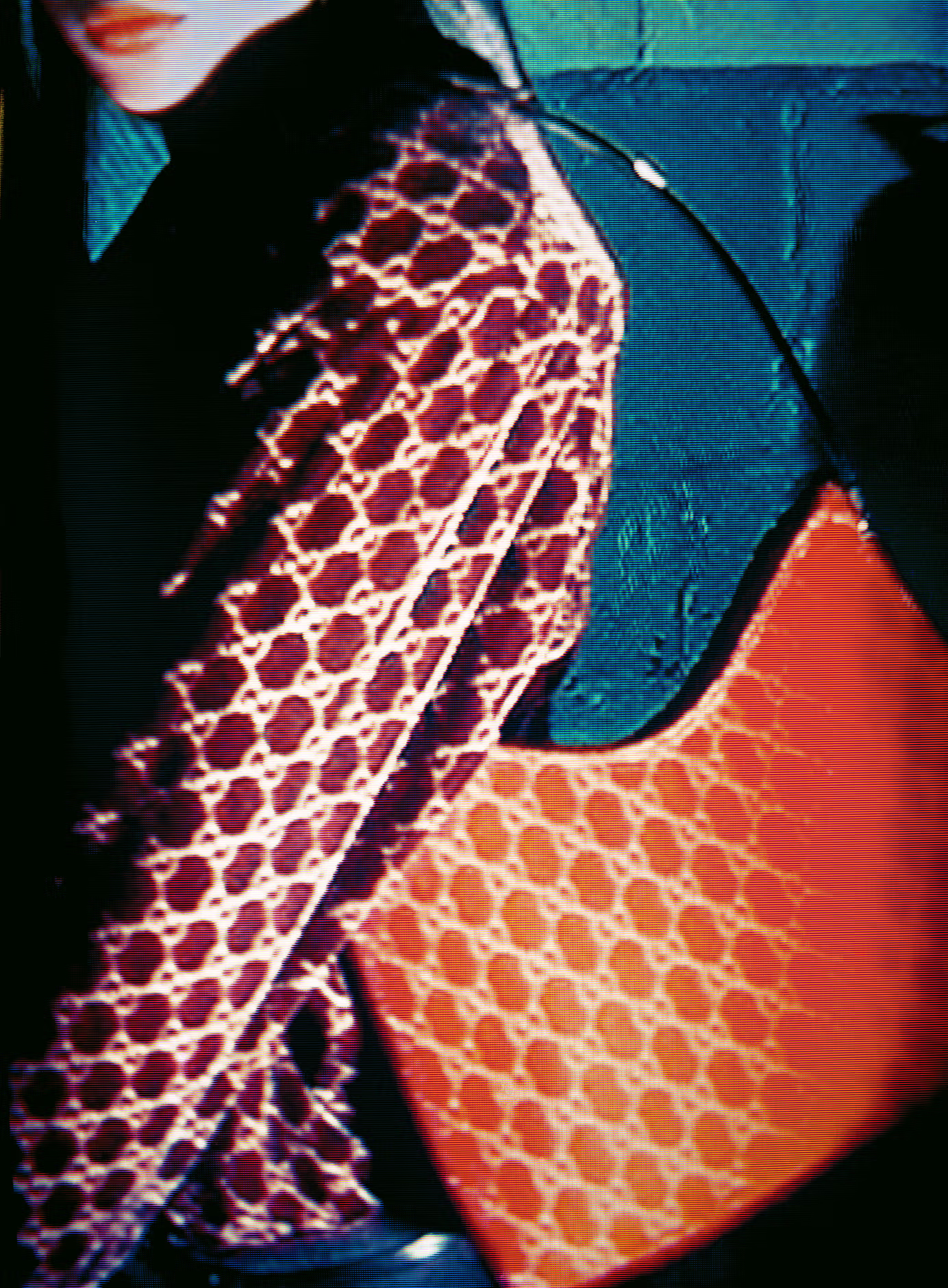
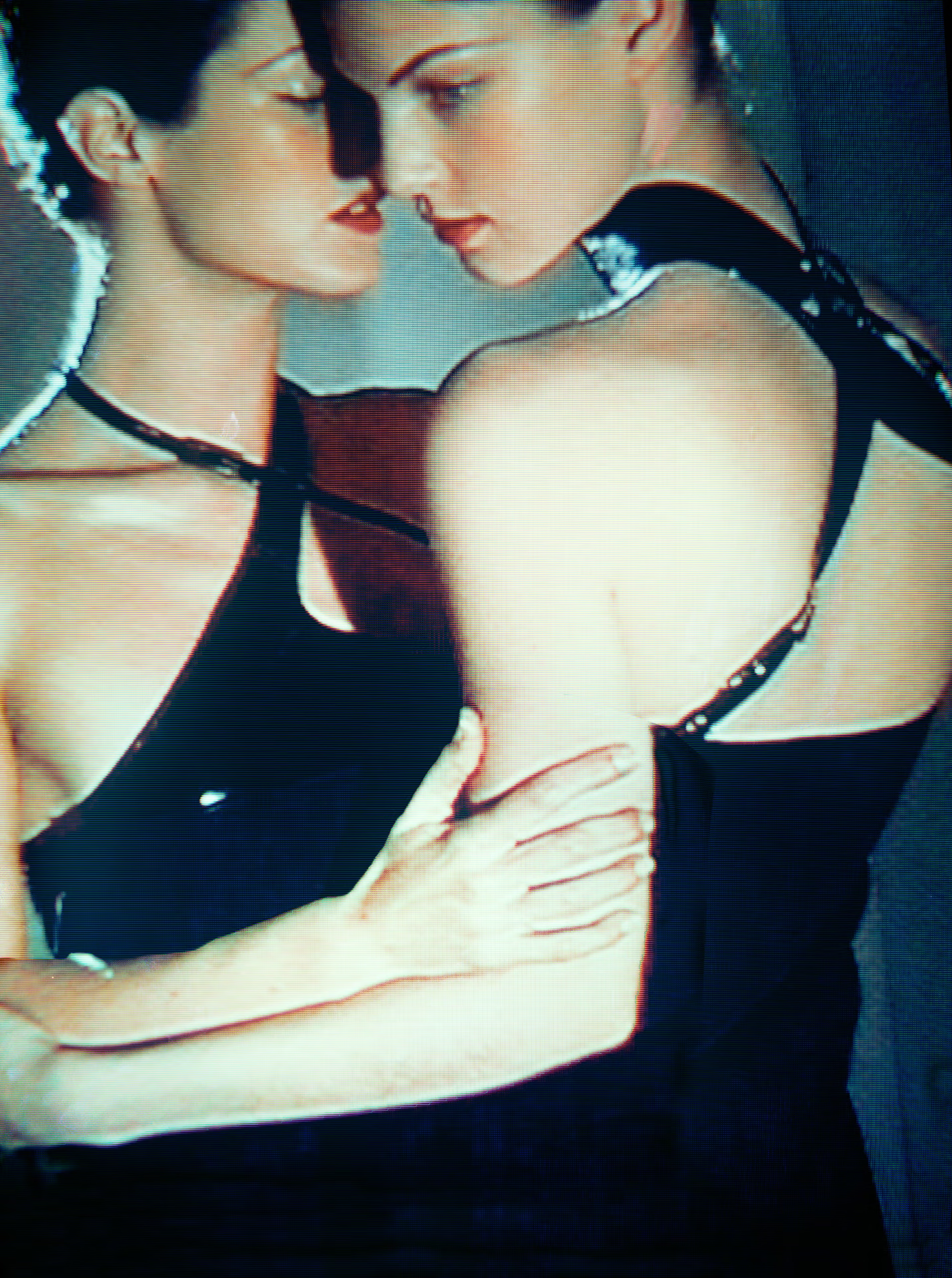
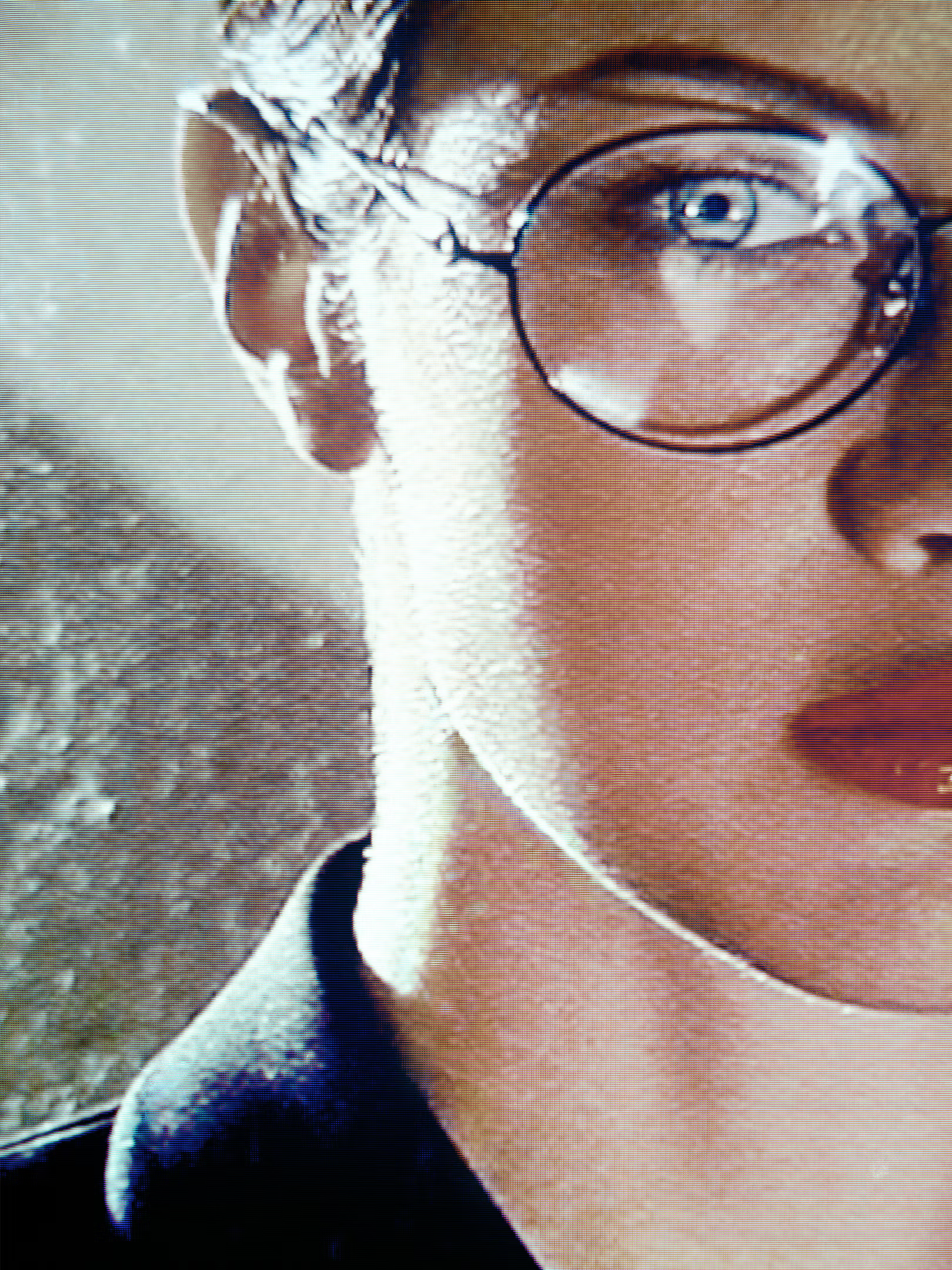
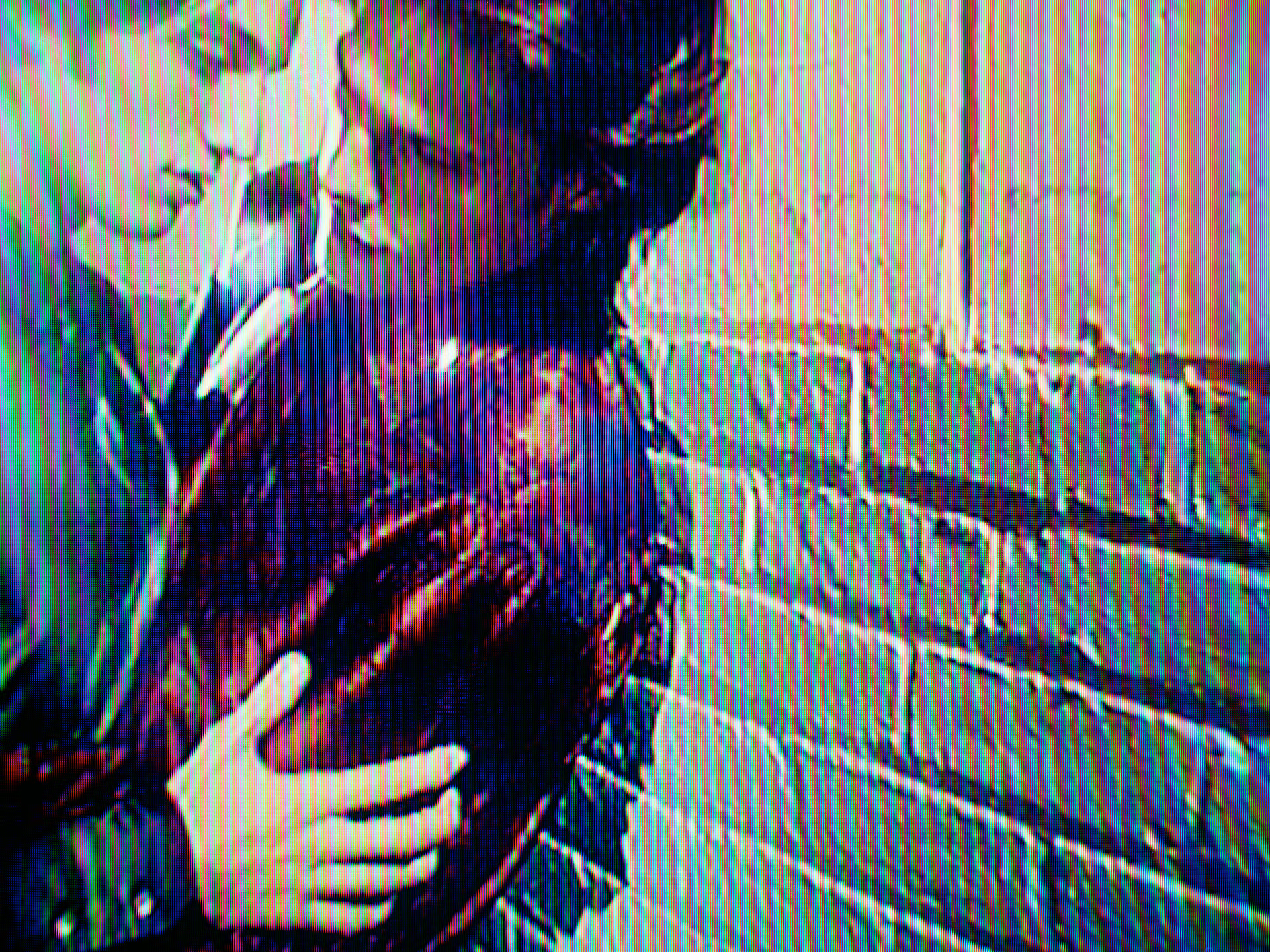
Gucci 1997 by Mario Testino

The Era of Porno Chic: A Unique Fashion Event

Tom Ford, the New Emperor

Porno Chic was born amid the near-collapse of an empire. In 1994, Tom Ford took over as creative director of the iconic Gucci fashion house. At that time, the brand was becoming outdated, forgotten by ready-to-wear enthusiasts.

Alongside Tom Ford’s career at Gucci, the 1990s and 2000s marked a new—and, to be honest, quite exciting—era in fashion and haute couture. While we may recall tailored suits and women dressed in formal attire—as was the case with brands like Ralph Lauren—it was also an era marked by experimentation with sexuality in fashion.

And for good reason: Tom Ford took a gamble—sex sells. In 1997, the first “Porno Chic” campaigns hit the global luxury scene. It was a gamble that Yves Saint Laurent—who would later see Ford take over as creative director of his fashion house—would not endorse. After Gucci, Tom Ford rose to become creative director of Yves Saint Laurent in 1999, only to leave in 2004, as Saint Laurent had always refused to acknowledge Ford’s work at the house: “To me, ‘porno chic’ is a disgrace; it’s the worst thing there is. Horrors propagated by a small clique, a small fashion scene that makes a lot of noise but is far removed from real life.”

During this same period, experimentation with fashion reached its peak with designers such as Thierry Mugler and Alexander McQueen, and Jean-Paul Gaultier’s iconic bustiers with conical breasts had become a staple on the runways since Madonna’s “Blond Ambition” tour in 1990.

But Tom Ford isn't the only face of "Porno Chic." He is an integral part of an iconic trio from the '90s and early 2000s: Carine Roitfeld and Mario Testino.

Gucci 2.0

Let’s take a quick look back. Gucci, founded in the 1920s by Guccio Gucci, the son of an Italian leather craftsman, was, for the vast majority of its existence over the past century, a luxury leather goods brand. Guccio founded a luggage company, which later expanded to include a line of shoes and a series of stunning commercial and artistic breakthroughs, such as the introduction of the Bamboo bag in 1947. The material was used at the time to address the difficulties in accessing high-quality materials in the aftermath of the war. Bamboo—exotic, sturdy, and elegant—not only ensured the continued marketing of Gucci bags but also proved to be an artistic success.

The events that led to the near-collapse of the Gucci fashion house began in the 1970s and rapidly deteriorated in the 1980s.

On the one hand, Aldo Gucci, Guccio’s heir and son—known for being the brand’s business mastermind—made the strategic mistake of granting licenses for the use of its double-G logo to several manufacturers to produce as many brand-related merchandise items as possible: umbrellas, trinkets, lighters, and other brand-related items, all of which were of poor quality. By adopting this strategy, Aldo was able to generate significant revenue, but only in the very short term, as the brand’s emblem no longer inspired anyone.

If you haven’t seen the movie: this is when Patrizia Reggiani, the wife of Maurizio Gucci—grandson of Guccio Gucci—enters the picture (we’ve taken the liberty of not listing every member of the family). Patrizia, a true gold digger, is dismayed by the company’s downfall, which had allowed her to live a life of luxury. She then pressures her husband to turn things around. Having inherited 50% of the company’s shares upon his father’s death, he makes it his mission to restore the company’s reputation.

However, due to exhaustion and several years of setbacks at Gucci, Maurizio does not seem to have found the right approach to accomplish his mission. As a result, from 1989 to 1993, Gucci suffered a loss of $30 million.

Tom Ford entered the scene against this backdrop—one that was no less disastrous, but one that left the door wide open for radical change. The range of possibilities had never been so broad for the brand. Domenico De Sole became CEO of Gucci; the company was no longer family-owned, and De Sole chose Ford to take over as creative director.

"When something loses its shock value, it loses its fashion value."

- Tom Ford

Porno Chic is here. Gucci loafers are transformed into pairs of heels; velvet—a fabric synonymous with elegance and indulgence—comes in blood red and bright orange; and silk glides over the models’ bodies in apple green and midnight blue in low-cut blouses that reveal the cleavage. Both the men’s and women’s collections become irresistible: touch me with your eyes, but keep your hands to yourself.

Left: Ludovico Benazzo and Georgina Grenville, photographed by Mario Testino for the Gucci Fall/Winter 1996 campaign

Right: Gucci Spring/Summer 2002 fashion show

Carine Roitfeld, the "queen" of *Vogue France*

Carine Roitfeld, then editor-in-chief of *Vogue France*, was a staunch supporter of the designer. The advertising campaigns took on a provocative tone, attracted a younger audience, and generated a flood of press coverage. For Tom Ford, there’s no such thing as bad publicity.

And it’s hard to imagine a bigger scandal than this, especially since, around the same time, Maurizio Gucci was mysteriously murdered—after selling his shares and divorcing Patrizia Reggiani—on March 27, 1995. On January 17, 1997, Patrizia Reggiani was arrested by police at her home in Milan.

Porno Chic, more than just an aesthetic, sanctifies the fall of an empire—a phoenix rising from the ashes—against a backdrop of scandal and blood-red velvet. It is an entire era that will be defined by it.

Patricia was released from prison in 2016, but could have been released on parole in 2011—an option she refused; the only condition for her release was finding a job: “I’ve never worked a day in my life, and I don’t intend to start now.”

Porno Chic isn't just about aesthetics; it's a movement that emerged during a period of scandal and the complete desacralization of fashion, set against a backdrop of mystery.

Carine Roitfeld and Tom Ford: Two Sides of the Same Coin

Carine Roitfeld, editor-in-chief of *Vogue France* from 2001 to 2011, has never made a secret of her middle-class upbringing in Paris’s 16th arrondissement. She began her career as a model, then became a journalist. She met Tom Ford, and it was artistic love at first sight. Around the same time, Condé Nast approached her to take the helm of Vogue France. She would support Ford with the fervor of Mary Magdalene.

Carine Roitfeld, still known today as the “Queen of Porno Chic,” has carried some baggage with her throughout her career. She was a controversial figure and was criticized upon her arrival at *Vogue* for her artistic role in the “erotico-chic” movement.

As she stated in her interview on France Inter in December 2025: “When you’re lucky enough, as I am, to have worked with Tom Ford for twenty-seven years, and then to have shared ten years of Karl Lagerfeld’s life—and, let’s not forget, Ricardo Tischi, whom I helped get a job at Givenchy.”

On March 1 of this year, 2026, she posted a carousel of photos on Instagram from the days of the Gucci Porno Chic fashion shows. In the caption:

“These are images that stay with you forever. The late 1990s, the early 2000s. Gucci. Tom. Mario. And a special energy in the air.”

They called it “Porno Chic.” The term was provocative, almost over-the-top, but above all, it spoke of freedom. A new way of looking at sensuality.

"There were several of us writing this story, without really thinking about the impact it would have. Tom Ford with his vision, Mario Testino with his eye, and me, right in the middle of it all, following my instincts and sometimes suggesting things that were a little crazy, like that Gucci thong, which became an iconic image."

Carine Roitfeld by Inez & Vinoodh

Mario Testino, the final piece of the puzzle

Certainly, Testino is a great fashion photographer, with a visual identity as distinctive and recognizable as those of photographers like Martin Parr, but he is also the driving force behind a new, raw movement. He draws on several major sources of inspiration, ranging from his idols to his childhood in Peru and his summers as a teenager in Brazil. Testino comes from a strict background of academic rigor and the Catholic faith. Photography entered his life more like an angel heralding a new path—one for which nothing had truly predestined him. Yet the sensuality inherent in Brazilian beaches took root in his mind as an aesthetic in its own right, and his religious upbringing soon prevented him from expressing himself as he would have liked. He is also deeply influenced by the photography of Cecil Beaton.

It was in the 1970s that Mario Testino left Peru for London. And that's when it all took off.

On his official website, there is a description of his art:

"Testino's artistic language has always transcended gender boundaries, blending and challenging notions of masculinity and femininity to evoke sensuality rather than sexuality."

Gucci Spring/Summer 2003 Campaign

Among the many highlights of his career, it’s always quite surprising to note that in 1997—the very year “porno chic” was born, and thus the year he played a major role in the movement’s emergence—Testino photographed Princess Diana in a understated portrait, yet signed it “Mario.” Lady D, so iconic for her aesthetic sensibility and status as a fashion icon—notably with the “Revenge dress”—was also the beloved face of England. Her tendency to challenge the tenets of the British monarchy surely led her to agree to be photographed by the photographer.

“One of my most memorable experiences was photographing Princess Diana. Not only was the experience itself extraordinary, but it opened doors for me, as that’s how I began photographing the royal families of Europe. This ties in with my attachment to tradition and family.”

The "Porno Chic" Aesthetic

Fall/Winter 1997 Collection, Tom Ford, by Mario Testino

On Mario Testino's website, it says:

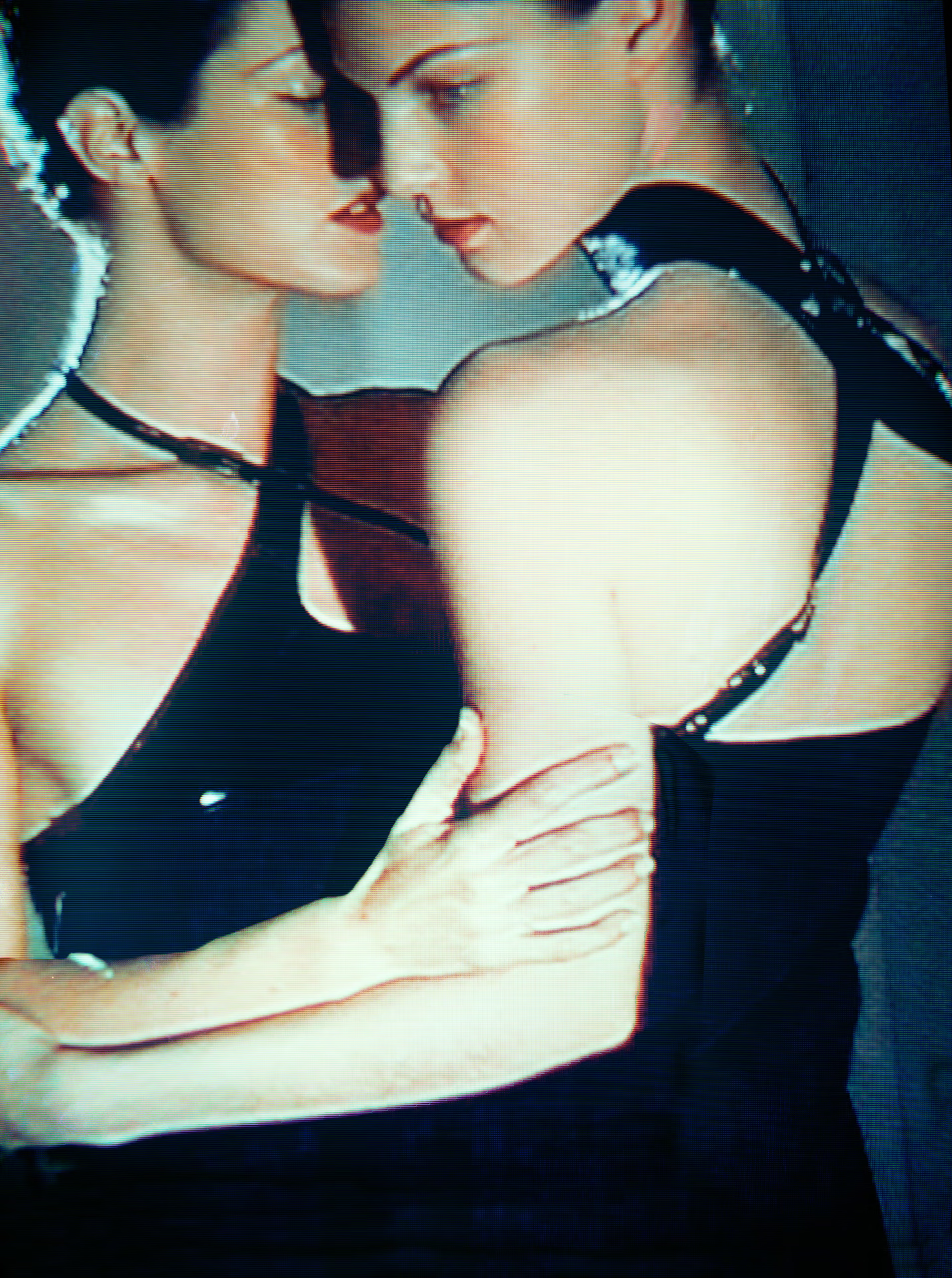
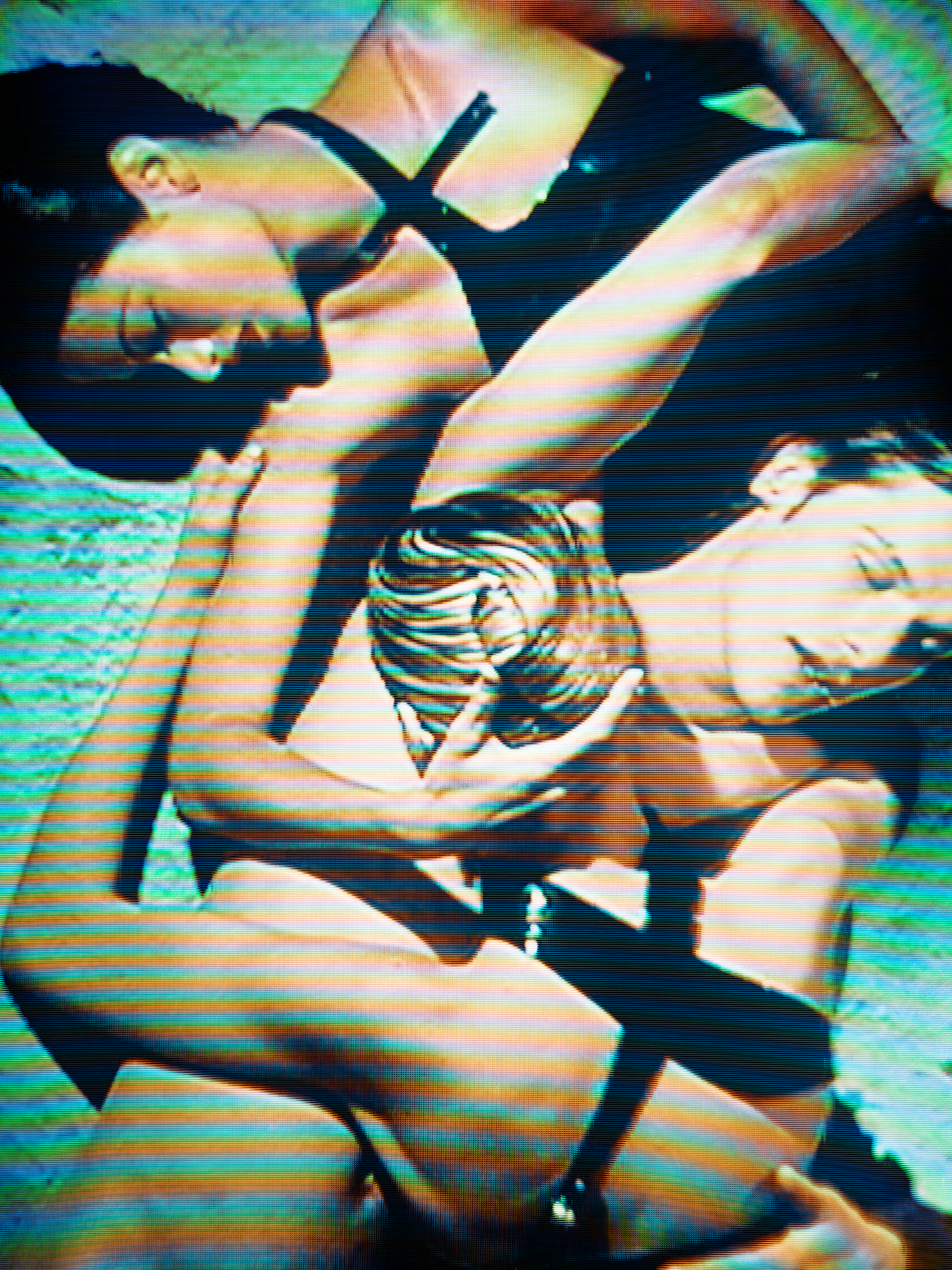
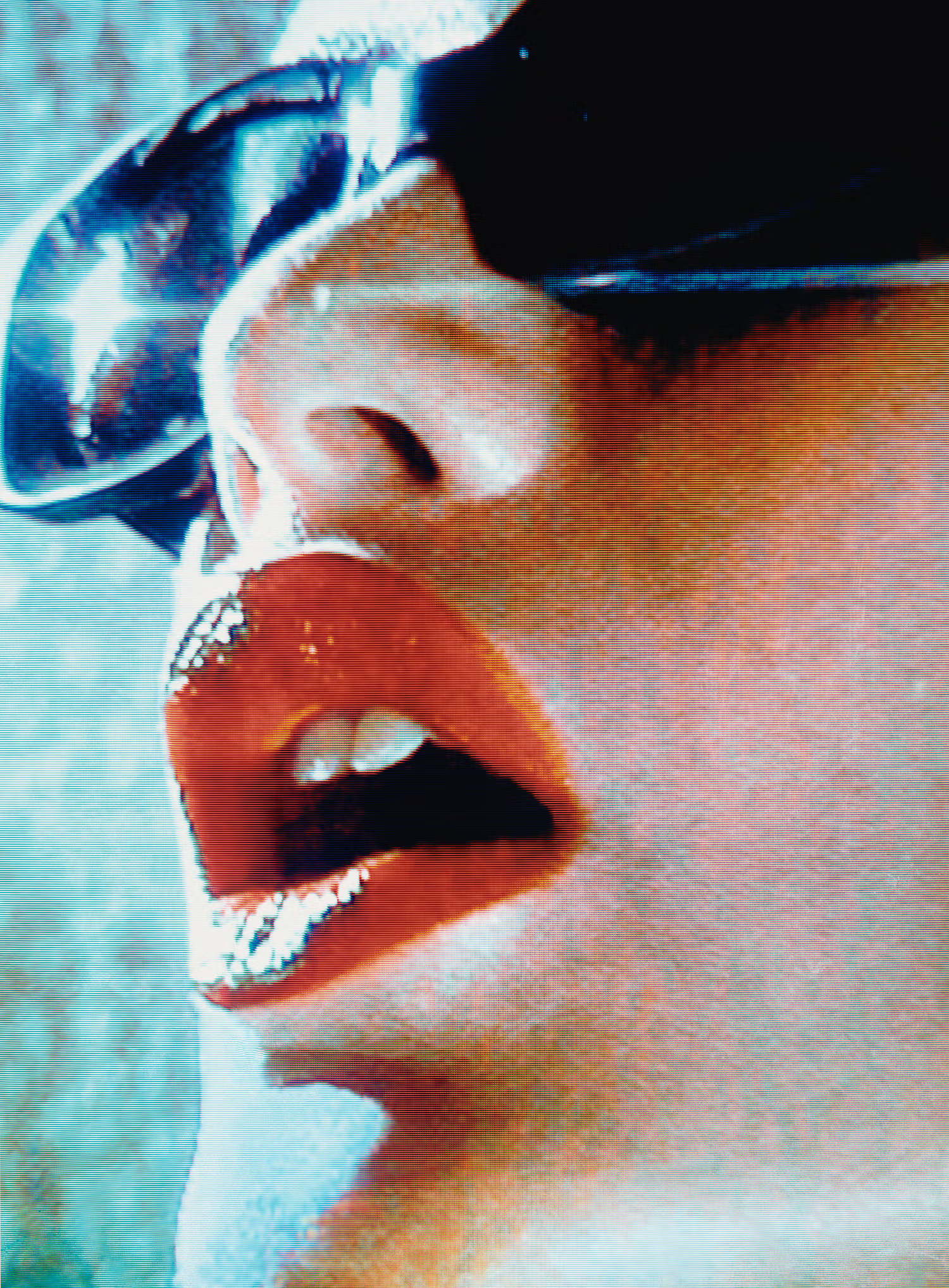
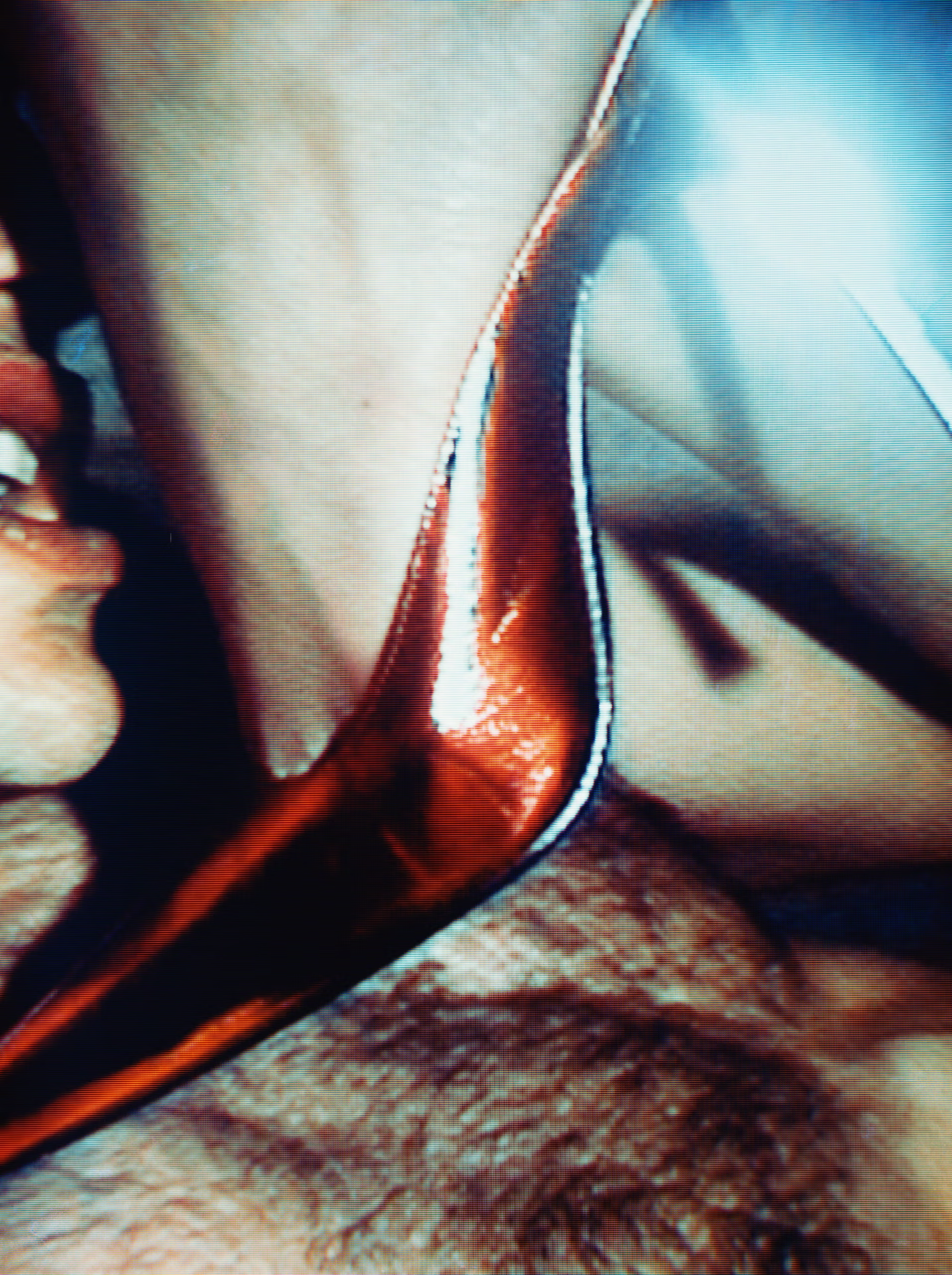
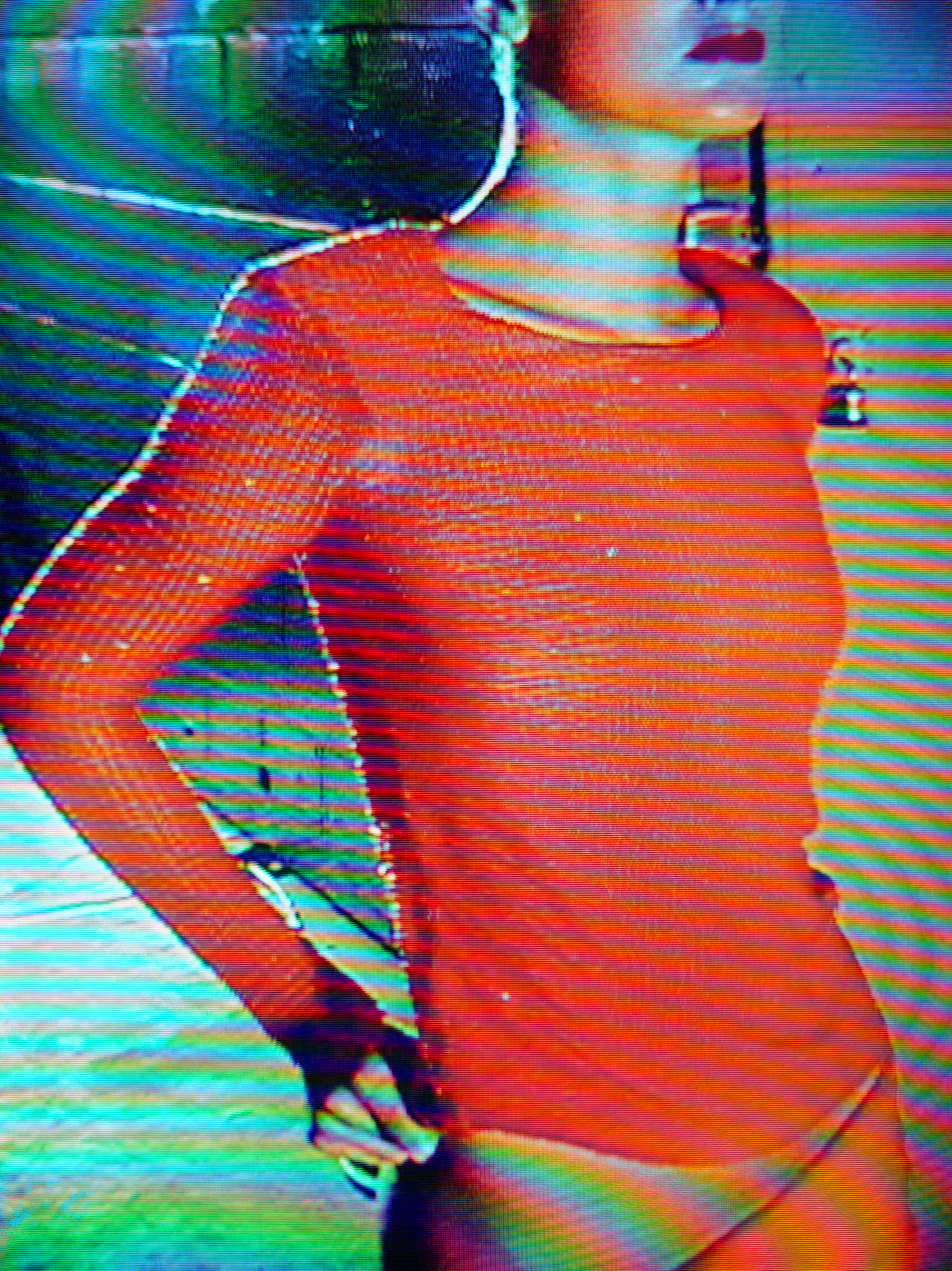
The Fall/Winter 1997 collection was launched at a time when the world was beginning to realize what it meant to be under constant surveillance. “People had started to feel like they were constantly being watched,” Testino recalls. “That’s what gave me the idea to create a campaign that would look as if it had been filmed by surveillance cameras—a world where you’re never really alone.”

Porno Chic is, therefore, a movement rooted in voyeurism. Much like the replicants in Blade Runner, Ridley Scott’s legendary science-fiction film released a decade earlier, the models in the campaign appear genetically perfect, embodying the pinnacle of physical aesthetics and the materiality of the images—cold, impersonal lighting, gazes frozen in time. It makes one wonder who is the greater voyeur: us, the viewers fascinated by these cold metal creatures, or them, seen through the lens—superhuman replicants far removed from our everyday imperfections.

In addition to the coldness emanating from the photographs, sexual transgression appears on screen. We see latent homosexuality, a mechanical threesome, and woven fabrics draped over the body like a second skin, like armor.

Still in keeping with this fascination with transgression, looking at a Gucci ad campaign back then was like watching—from the comfort of your cheap couch—a golden youth, a youth that screams chic and provocative elegance that we, for our part, lack. Eve holds out an apple to us, the taste of which we’ll never know. If we steer clear of sin, it’s not out of conscience—it’s because we don’t have the money.

Prominent cheekbones, fuller lips, arched eyebrows—faces ready for the camera’s flash as well as for a duel meant to put us in our place. We find this kind of narrative in certain contemporary series, featuring extremely wealthy teenagers caught up in a sexual and relational decadence masked by domination. This is the case with the Spanish series *Elite*, a huge hit in 2018; it’s been nearly 10 years now since we first saw these young actors catapulted into the spotlight as the show explored various themes surrounding the pitfalls of wealth, youth, and its capacity for debauchery. The entire narrative stakes are at play here: individual weaknesses are erased—to the point of non-existence—as long as dominance through physical appearance and luxury allows it.

Gucci’s “Porno Chic” is a bit like that. The aesthetic narrative of the 1997 campaigns is captivating—enjoyable if you identify with it, frankly repulsive if you can’t stand gratuitous provocation. In any case, Ford, Roitfeld, and Testino didn’t just succeed in their gamble to resurrect the luxury house from its ashes. The exclusive circle of “porno chic” has etched a fashion aesthetic into history.

Leave a comment